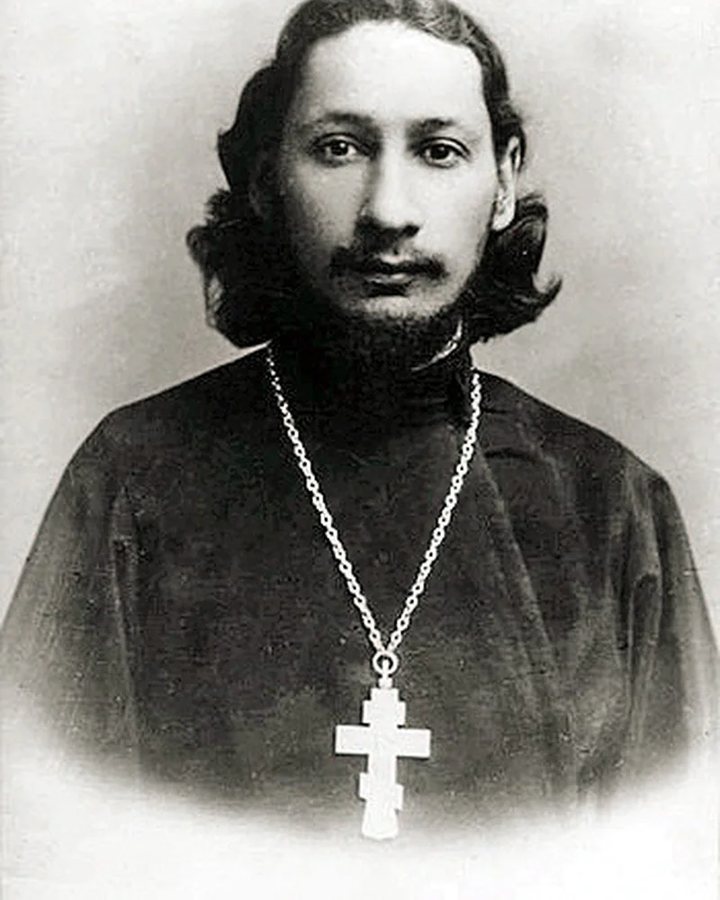
 Pavel Florensky1882–1937Pavel Florensky was a versatile Russian polymath who lived from 1882 to 1937. A priest and theologian, he also made significant contributions to mathematics, physics, and electrical engineering. Born in Yevlakh, he sought to bridge the gap between scientific rationalism and spiritual faith through his diverse intellectual pursuits. His work spanned various disciplines, including art theory and electrodynamics, and he served as a professor and editor. During the early Soviet period, he contributed to the state electrification plan before his eventual arrest and death in the Leningrad Oblast.
- VVardan Areveltsi1198–1271Vardan Areveltsi was a prominent 13th-century Armenian scholar, historian, and philosopher who lived from approximately 1198 to 1271. Born in Ganja, he became a highly educated polyglot, mastering languages such as Greek, Latin, Hebrew, and Persian. He played a significant role in the religious and political life of the era, serving as a teacher, a negotiator with Mongol rulers, and a defender of Armenian ecclesiastical traditions. His extensive literary output includes foundational works on world history, geography, and natural sciences, leaving a lasting impact on Armenian intellectual culture.
 Elisæus of AlbaniaSaint · 1–1Elisæus of Albania was a patriarch and missionary credited as the primary illuminator of the Church of Caucasian Albania. Born in Jerusalem, he traveled to the region to spread the Christian faith. Historical traditions offer different accounts of his origins, variously describing him as a disciple of Saint Thaddeus or a direct follower of Jesus who was commissioned by James the Just. His efforts led to the establishment of early Christian foundations in the East, most notably in the area of Kish.
- GGrigorisSaint · 302–335Grigoris was a 4th-century monk who served as the Catholicos of Caucasian Albania. Born in Caesarea, Cappadocia, he was the grandson of Gregory the Illuminator. After being ordained at the age of fifteen, he traveled to the Maskut Kingdom to preach. His mission ended in tragedy when he was trampled by mounted soldiers in the Vatnean Fields, also known as Paytakaran. He died in 335, leaving a lasting impact on the religious history of the region.
- KKatolikos İyeremiyaSaintKatolikos İyeremiya was a bishop of the Caucasian Albanian Church who served during the era of King Asvagen. He became the successor to Catholicos John I, maintaining the leadership of the church during the early 5th century. Historical records, including the list compiled by Moses of Kaganatvats, place him as the twelfth individual in the succession of catholicoses.
 Vladimir AmbartsumovHieromartyr · 1892–1937Vladimir Ambartsumov was an Orthodox priest and hieromartyr born in Shamakhi in 1892. After studying physics and mathematics at Moscow University, he transitioned through various Christian traditions before being ordained as a priest in the late 1920s. He served as a rector for several churches in Moscow and Glazov. During the Soviet era, he was arrested and accused of counter-revolutionary activities. He was executed at the Butovo firing range in 1937, and he is now venerated as a saint within the Eastern Orthodox Church.
- KKatolikos I ZəkəriyyəSaintZacharias I was an Albanian Catholicos who lived during the 4th century. He is recognized as the ninth individual in the historical succession of Catholicoses of Albania. As a prominent religious leader of his time, he is commemorated within the ecclesiastical traditions of the Albanian church.
- GGaregin KozikyanSaint · 1878–1915Garegin Kozikyan was an Armenian public figure and editor born in Baku in 1878. During the early 20th century, he became a prominent figure in social-democratic movements, working within the South Caucasus and later in Geneva. He was involved in founding various worker organizations and published several periodicals, including the newspaper *Banvor*. His political activities and editorial work eventually led to his exile from Russia in 1903. He died in the Trebizond vilayet in 1915 during the Armenian Genocide.