John PaulSaint · 1920–2005Pope John Paul II (born Karol Józef Wojtyła; 1920–2005) was the head of the Catholic Church and sovereign of Vatican City from 1978 until his death in 2005. He was the first non-Italian pope since Adrian VI in the 16th century and the third longest-serving pope in history. He was also an important philosopher and theologian of the 20th century, known for his travels, his efforts to improve relations with other faiths, and his role in opposing communist rule in Poland and Europe.
 CharlemagneBlessed · 748–814Charlemagne was King of the Franks from 768, King of the Lombards from 774, and Emperor of the Carolingian Empire from 800. He united most of Western and Central Europe and was the first recognised emperor to rule from the west after the fall of the Western Roman Empire about three centuries earlier. His reign brought political, social and cultural changes that shaped Europe throughout the Middle Ages, and many historians call him the Father of Europe.
 Nicholas II of RussiaSaint · 1868–1918Nicholas II was the last Emperor of Russia, reigning from 1894 until his abdication in 1917 during the Russian Revolution. A member of the Romanov dynasty, he presided over the Russian Empire's role in the Russo-Japanese War and the First World War. He and his family were killed by the Bolsheviks in 1918, during the Russian Civil War. His reign was marked by industrial growth and diplomatic activity, but also by unrest, military defeats and widespread criticism of his leadership.
 DavidSaint · 1040 BC–969 BCDavid was a 10th-century BC monarch and prophet who ruled the united Kingdom of Israel. Born in Bethlehem as the youngest son of Jesse, he was originally a shepherd and a musician skilled with the lyre. He rose to prominence after defeating the Philistine giant Goliath, eventually becoming the leader of the Tribe of Judah before uniting all Israel. After establishing Jerusalem as his capital, he reigned as a significant figure in biblical history, serving as a model for future kings and the ancestor of the Messiah.
 Constantine the GreatSaint · 272–337Constantine the Great was a Roman emperor who ruled from 306 to 337. Born in Naissus, he rose to power through military service and civil wars, eventually becoming the sole ruler of the empire. He is most famous for being the first emperor to convert to Christianity, a transition marked by the Edict of Milan which ended the persecution of Christians. By establishing Constantinople as the new imperial capital, he fundamentally altered the political and religious landscape of the Mediterranean world.
 MosesRighteous · 1393 BC–1273 BCMoses was a Hebrew prophet and leader who guided the Israelites during their exodus from Egyptian slavery. Born in Helwan, he was raised by the Egyptian royal family after being found in the Nile by a princess. Following a divine encounter at a burning bush on Mount Horeb, he returned to Egypt to demand the liberation of his people. He is recognized as a central legislator and a righteous figure across several major religious traditions.
 Solomon990 BC–931 BCSolomon was a monarch of the united Kingdom of Israel who ruled during the 10th century BCE. As the successor to his father, David, he presided over a period characterized by significant commercial prosperity and the expansion of military strength. He is traditionally identified as a wise ruler and a prophet, credited with the authorship of several biblical books including Proverbs and Ecclesiastes. While his reign is celebrated for its opulence and the construction of the Temple in Jerusalem, biblical accounts also note that his later life was marked by the introduction of foreign religious practices.
 Pontius PilatusPontius Pilate was the fifth Roman prefect of Judaea, serving from approximately 26 to 36 AD under Emperor Tiberius. He is primarily recognized for presiding over the trial of Jesus and authorizing his crucifixion. While historical records regarding his early life are scarce, he remains one of the most well-documented governors of the province. His role in the biblical narrative ensures his enduring presence in Christian theology, as his name is included in both the Apostles' and Nicene Creeds.
 Justinian ISaint · 482–565Justinian I was a Byzantine emperor who reigned from 527 to 565. Born around 482 in Tauresium, he rose from a peasant background to become a powerful ruler after being adopted by his uncle, Emperor Justin I. His ambitious reign focused on the *renovatio imperii*, an attempt to reclaim lost Western Roman territories, which resulted in the recovery of parts of Italy, North Africa, and southern Spain. A dedicated legislator and writer, he is most famously remembered for his massive legal reforms and his extensive building projects throughout the empire.
 Isabella I of CastileServant of God · 1451–1504Isabella I of Castile (1451–1504), also known as Isabella the Catholic, was Queen of Castile and León from 1474 until her death. Through her marriage to Ferdinand II of Aragon, she also became Queen of Aragon from 1479. Reigning together over a dynastically unified Spain, the pair are known as the Catholic Monarchs. Her reign marked the end of the Reconquista and the start of the Spanish Empire, which made Spain a major force in European politics.
 Theodosius ISaint · 347–395Theodosius I was a Roman emperor who ruled from 379 until his death in 395. Born in Hispania, he rose through the military ranks under his father's guidance before being appointed to lead the empire following the death of Valens. He is notably the final ruler to govern the entire Roman Empire before it was divided between his two sons, Arcadius and Honorius. As a devout Christian, he played a pivotal role in shaping religious policy by establishing the Nicene Creed as the official orthodox doctrine.
 Charles I of England1600–1649Charles I was the monarch of England, Scotland, and Ireland from 1625 until his execution in 1649. Born at Dunfermline Palace in 1600 to King James VI of Scotland, he was a member of the House of Stuart. His reign was defined by intense friction with Parliament over royal prerogatives and religious policies, specifically his support for high church Anglicanism. This conflict led to the English Civil War, resulting in his defeat by the Parliamentarian forces and his subsequent trial and death.
 Alfred the GreatSaint · 849–899Alfred the Great was a 9th-century monarch who ruled the West Saxons starting in 871 and the Anglo-Saxons from 886. Born around 849 in Wantage, he was the son of King Æthelwulf. He is widely recognized for his military leadership, particularly his victory against Viking forces at Edington in 878, which led to a division of territory with the Danelaw. Beyond his role as a warrior and politician, he was an influential writer and reformer who significantly improved the legal and military systems of his kingdom.
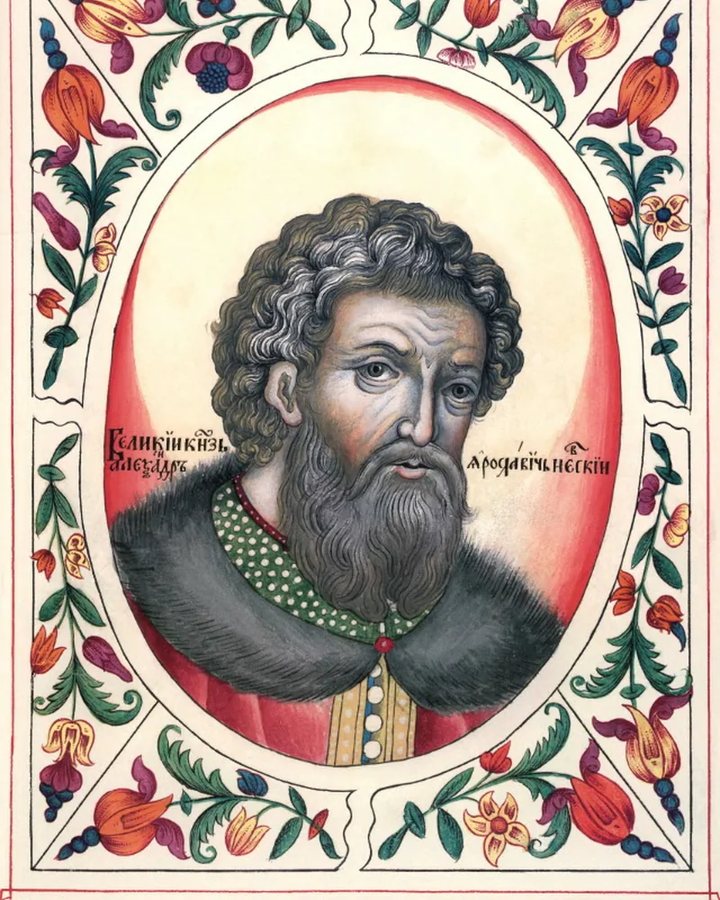 Alexander NevskyRight-believing · 1220–1263Alexander Nevsky was a 13th-century ruler of several Russian principalities, including Novgorod and Vladimir. Born in Pereslavl-Zalessky around 1221, he became a prominent military leader known for defending his territories against foreign incursions. He is most famous for his victories over Swedish forces at the Neva River and against German crusaders during the Battle on the Ice. By choosing to pay tribute to the Golden Horde, he sought to protect the Eastern Orthodox Church from Western influence. He died in Gorodets in 1263 and is venerated as a saint in both Catholic and Orthodox traditions.
 Dmitry DonskoySaint · 1350–1389Dmitry Donskoy was a 14th-century Grand Prince of Moscow and Vladimir who reigned from 1359 until his death in 1389. Born in Moscow, he ascended to power as a child following his father's death and was initially guided by Metropolitan Alexius. He is most famous for being the first Russian ruler to directly confront Mongol authority, achieving a significant military triumph against the forces of Mamai at the Battle of Kulikovo in 1380. This victory, which earned him his nickname, helped consolidate the prestige and authority of the Moscow principality.
 Biblical MagiBiblical Magi are the group of travelers described in the Gospel of Matthew who traveled from the East to honor the infant Jesus. Following a celestial sign, they located the child and presented him with three specific offerings: gold, frankincense, and myrrh. While the biblical text does not specify their exact number, names, or social status, Christian tradition has long identified them as three kings. They are celebrated as saints in various traditions, including Catholic, Orthodox, Anglican, and Oriental churches.
 Pius VIIServant of God · 1742–1823Pius VII was a Benedictine monk who served as the head of the Catholic Church and ruler of the Papal States from 1800 until 1823. Born Barnaba Chiaramonti in Cesena, he rose through the ecclesiastical ranks to become the Bishop of Tivoli and later the Bishop of Imola before his election to the papacy. His reign was significantly shaped by the Napoleonic Wars, during which he faced imprisonment by French forces. He is remembered for his diplomatic efforts, including the Concordat of 1801, and for expanding the Church's presence in the United States.
 Edward the ConfessorSaint · †1066Edward the Confessor was an Anglo-Saxon monarch who ruled England from 1042 until his death in 1066. As the final ruler of the House of Wessex, he ascended the throne following the death of Harthacnut. Born in Islip to Æthelred the Unready and Emma of Normandy, Edward spent much of his youth in exile, likely in Normandy, due to Danish rule in England. His reign, lasting twenty-four years, ended just before the Norman Conquest, which saw his successor, Harold Godwinson, defeated at the Battle of Hastings.
 Stephen I of HungarySaint · 969–1038Stephen I of Hungary was the first king of Hungary, ruling from approximately 1000 until his death in 1038. Born Vajk to Grand Prince Géza and Sarolt, he transformed the Hungarian state by unifying the Carpathian Basin and establishing a Christian kingdom. After succeeding his father, he consolidated power by defeating rival chieftains and securing his authority through a marriage to Gisela of Bavaria. As an apostolic king, he laid the foundations for the nation's religious and administrative structures, ensuring the country's independence and its integration into Christian Europe.
 Olga of KievEqual-to-the-apostles · 890–969Olga of Kiev was a 10th-century regent of Kievan Rus' who governed on behalf of her son, Sviatoslav, from 945 to 957. Following the death of her husband, Prince Igor, she famously exacted violent retribution against the Drevlian tribe for his murder. As the first Rurikid ruler to be baptized, she paved the way for her grandson, Vladimir the Great, to establish Christianity as the state religion. She is honored in the Eastern Orthodox tradition as a saint with the title "Equal to the Apostles."
 Louis IX of FranceSaint · 1214–1270Louis IX of France was a medieval monarch who ruled his kingdom from 1226 until his death in 1270. Born in Poissy, he ascended to the throne at age twelve under the regency of his mother, Blanche of Castile. He is recognized as the only French king to be canonized as a saint. His reign is noted for significant legal reforms and territorial expansion, though it ended during the Eighth Crusade in Tunis, where he died from dysentery.
 Christina of SwedenSaint · 1626–1689Christina of Sweden was the monarch of the Swedish Empire from 1632 until her abdication in 1654. Born into the House of Vasa in Stockholm, she succeeded her father, Gustavus Adolphus, at the age of five. Known for her profound intellect and interest in the arts, she sought to transform Stockholm into a cultural center. Her decision to convert to Catholicism and her refusal to marry eventually led her to relinquish her throne and relocate to Rome, where she spent the remainder of her life.
 SamuelSaint · 1102 BC–1014 BCSamuel was a significant biblical prophet and judge who lived during the transition from the era of judges to the establishment of the United Kingdom of Israel. Born to Hannah and Elkanah in Ramathaim-Zophim, he was dedicated to God's service from his youth at the sanctuary in Shiloh. He played a pivotal role in Israelite history by anointing both Saul and David as kings, effectively facilitating the shift toward a centralized monarchy. Recognized as a trustworthy leader, he served as a religious and political figure during a period of significant tribal change.
 Clovis I466–511Clovis I was a Frankish monarch who ruled from 481 until his death in 511. As the founder of the Merovingian dynasty, he transformed the Frankish leadership from a collection of small tribal kingdoms into a unified monarchy. His territories expanded across much of Gaul, stretching from the southern Netherlands to parts of modern-day Germany. By conquering various groups, including the Alemanni and the Visigoths, he established his family as a dominant political force in western Europe and laid the foundations for the future French state.
 Leo IIISaint · 750–816Leo III was the pope of the Catholic Church and leader of the Papal States from 795 until his death in 816. Born in Rome around 750, he served as a cardinal-priest under Adrian I before his own election. His pontificate was marked by a close alliance with the Frankish ruler Charlemagne, whom he famously crowned emperor in 800. Despite facing violent physical attacks and legal accusations from political rivals, Leo maintained his position through the protection of the Carolingian dynasty.
 Vladimir the GreatEqual-to-the-apostles · 956–1015Vladimir the Great (c. 958 – 1015) was Prince of Novgorod from 970 and Grand Prince of Kiev from 978 until his death. Born the illegitimate son of Sviatoslav I, he seized power after a fratricidal struggle, expanded his realm to the Baltic Sea and defended its frontiers. Originally a pagan, he adopted Christianity in 988 and brought it to Kievan Rus'. The Catholic Church and the Eastern Orthodox Church both canonised him as Saint Vladimir.
 Grand Duchess Anastasia Nikolaevna of RussiaPassion bearer · 1901–1918Grand Duchess Anastasia Nikolaevna of Russia (1901–1918) was the youngest daughter of the last Tsar, Nicholas II, and Tsarina Alexandra Feodorovna. Born in Peterhof, she was known for her vivacious, mischievous, and energetic personality. As part of the imperial family, she lived a relatively modest life despite her high rank. In July 1918, she was murdered alongside her parents and siblings by Bolshevik revolutionaries in Yekaterinburg. Following her death, she was recognized as a saint and passion bearer by the Russian Orthodox Church.
 Theodosius II401–450Theodosius II was the Byzantine emperor who governed the Eastern Roman Empire from 402 until his death in 450. Born in Constantinople in 401, he was named Augustus when he was only nine months old. Following the death of his father, Arcadius, he became the sole ruler of the East in 408. Known as the Calligrapher, his reign was marked by significant legal, educational, and military developments, including the establishment of the University of Constantinople and the commissioning of the Codex Theodosianus.
 Gregory XBlessed · 1210–1276Gregory X, born Teobaldo Visconti around 1210 in Piacenza, was a Cistercian who served as the head of the Catholic Church from 1271 until his death in 1276. His election followed the longest papal vacancy in the history of the Church, which had lasted from 1268 to 1271. During his papacy, he oversaw the Second Council of Lyon and established significant new rules for the conduct of future papal elections. He is recognized as a blessed in the Catholic tradition.
 Anastasius I430–518Anastasius I was an Eastern Roman emperor who reigned from 491 to 518. Born in Dyrrachium, he was a career civil servant who ascended to the throne at age 61 after being selected by the widow of his predecessor, Zeno. His administration was noted for significant improvements to the imperial economy, bureaucracy, and fiscal stability. Although he was a Monophysite Christian, which created religious tension, his successful financial reforms provided a strong foundation for the future reign of Justinian I.